icon UPSC Test Series

  • Sectional, Combined & Full-length tests based on UPSC pattern.
  • Exclusive Current Affairs + Static Subjects to score high marks.

icon APPSC Exclusive Test Series

  • APPSC Group-I & II Integrated (Prelims & Mains).
  • Group-I & II Prelims Exculsive.
  • Group-I & II Mains Exculsive.

icon TGPSC Exclusive Test Series

  • TGPSC Group-I & II Integrated (Prelims & Mains).
  • Group-I & II Prelims Exculsive.
  • Group-I & II Mains Exculsive.

🎯 Start Your Preparation Today

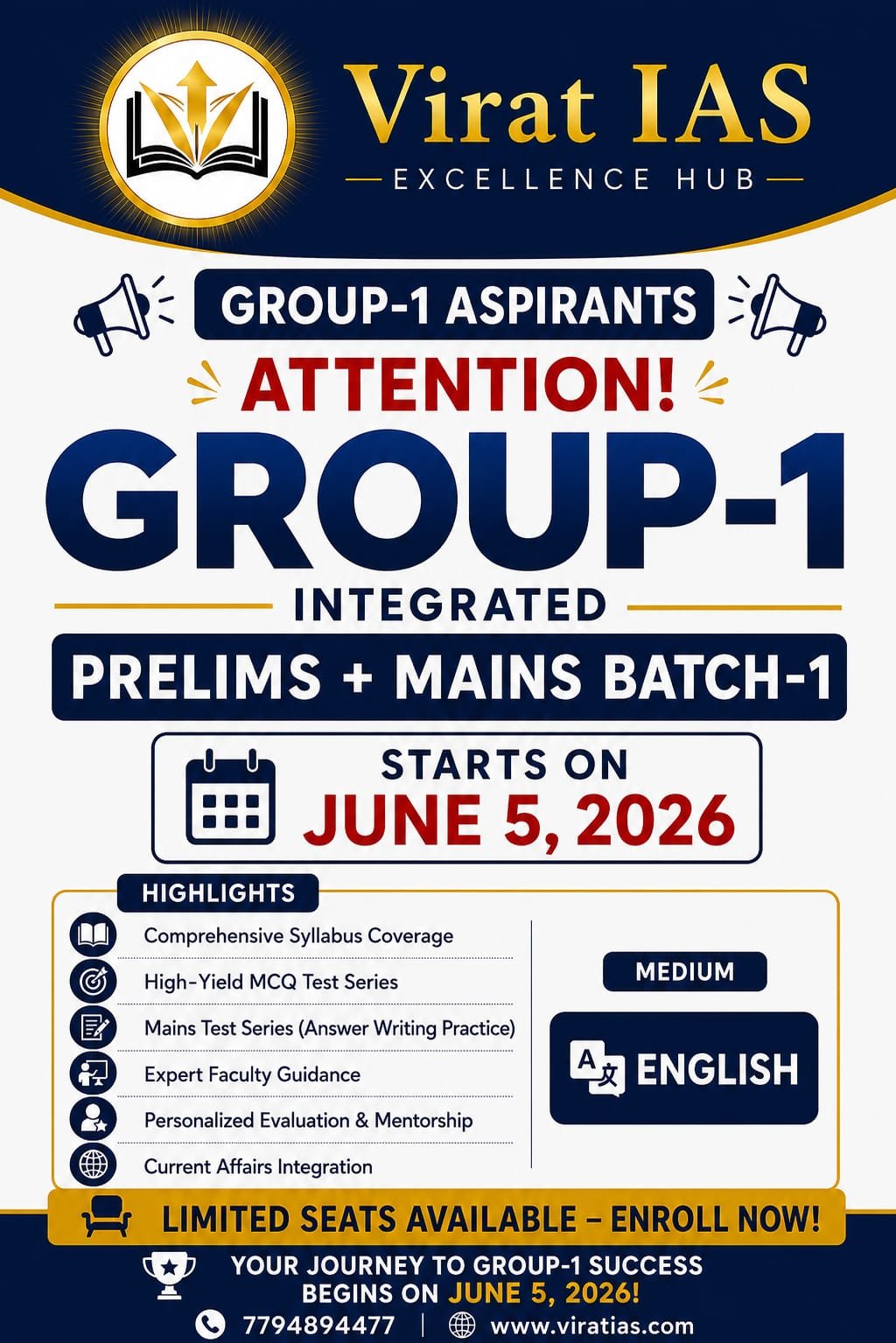
Enroll now for UPSC, APPSC & TGPSC and Test Series to boost your success with expert guidance and mentorship.

Enroll Now

UPSC Mains GS-II (Indian Constitution, Polity, Governance, Social Justice, Government Schemes, and International Relations) (IR).

You Focus on integrated preparation for UPSC and APPSC / TGPSC, with a strong emphasis on linking static concepts to dynamic current affairs and mastering Mains answer writing.

I. Result-Oriented Strategy (Integrated Approach) :

    1. Integration of Static and Dynamic :
  • Core Principle: GS-II is fundamentally a Current Affairs paper with a Static Base. Questions are rarely purely factual; they are analytical and linked to recent developments (e.g., judicial judgments, government policies, international events).
  • Strategy: When reading a static topic (e.g., Cooperative Federalism), immediately link it to current issues (e.g., GST Council disputes, Centre-State relations during a pandemic and interstate - water disputes among the states).
  • APPSC / TGPSC Linkage: The core GS-II(UPSC) syllabus is about 70% common with APPSC / TGPSC Group-I & II. Focus on the common syllabus first, then dedicate time to Andhra Pradesh-specific Governance, Social Justice, and Government Schemes, as well as the AP / TG Reorganisation Act, 2014.
    2. Answer Writing Mastery (Mains Focus) :
  • Structure : Follow the Introduction-Body-Conclusion (IBC) format for every answer.
  • Introduction : Define the key concept or start with a relevant current affair/Supreme Court judgment/Constitutional Article.
  • Body : Use clear sub-headings, bullet points, and flowcharts to structure points. Address all parts / Keywords of the question.
  • Conclusion / Way forward : Write a balanced perspective, a way forward, a committee recommendation (e.g., Second ARC), or a reference to Constitutional values (e.g., "spirit of federalism").
  • Value Addition: Quote Constitutional Articles (e.g., Article 263 for Inter-State Council), Supreme Court Judgments (e.g., Kesavananda Bharati Case for Basic Structure), Committee Reports (e.g., Second ARC, Punchhi Commission), and relevant data/indices (e.g., Global Hunger Index for Social Justice).

II. Approach & Study Plan (3-Phase) :

Phase Duration Focus Area Endeavour & Outcome
Phase 1: Foundation (3 Months) First 3 months of prep Polity & Constitution (Static) Read NCERT (9th - 12th Classes of Indian Polity for basic foundation), refer M. Laxmikanth - Indian Polity for coverage of entire syllabus and refer DD Basu - Introduction to the Constitution of India for critical Understanding of the syllabus actively.

Make short notes, topic-wise notes on Constitutional & Statutory Bodies, Amendments, Basic Structure, Parlament Acts and relavent Supreme court judgments.
Phase 2: Integrate with Phase 1 (3 Months) Second 3 months Governance, Social Justice, Government schemes and IR (Dynamic) Integrate current affairs with the static syllabus. Start reading Second ARC reports. Prepare a list of Schemes, SC Judgments, and International Groupings such as UN reforms, relavance of SAARC, NAM, BRICS and BIMSTEC etc.
Phase 3: Integrate with Phase 1 & 2 and Revision & Practice Third 1 month Holistic Syllabus Coverage Daily Answer Writing Practice. Weekly revision. Attempt full-length Mains Test Series.

III. Source of Material :

Subject Area Core Books/Resources Dynamic Sources APPSC / TGPSC Specific
Polity & Constitution NCERT Class IX - XII,
M. Laxmikanth,
DD Basu
The Hindu/Indian Express Editorials, PRS India AP / TG State Executive & Governor/CM issues, Local Bodies
Governance & Social Justice Second ARC Reports, NITI Aayog Yojana/Kurukshetra, PIB AP / TG Welfare Schemes,Panchayati Raj and Local Governance issues and Resources kranch
International Relations India and the World, MEA Website Newspapers, Monthly Current Affairs AP / TG Regional issues AP / TG Reorganisation Act and Ports, Connectivity, Diaspora

IV. Toppers' Skills and Strategies :

Skill Description & Application Prelims Value Addition Mains/Interview Value Addition
Interlinking (Static-Dynamic) Connect static topic with current issue. Improves MCQ accuracy High-quality analytical answers with relavent atricles, Acts and SC judgments
Structured Note-Making Crisp notes under syllabus headings and Keywords. Quick revision Easy answer writing(Topic related to Political,Administrative, Judicial and Governance)
Reform-Oriented Thinking Suggest solutions & policy reforms - Shows administrative ability to resolve the administrative challanges and issues with balanced writing of conculsion
Strategic use of Keywords Use technical terms, diagrams - Better presentation score

V. Mentors' Guidance (Prelims, Mains, Interview):

  • 1. Prelims (Objective Test)
    • Focus : Core Constitutional articles, features, amendments, and the application of current affairs (e.g., key features of a newly launched scheme, a recent international agreement's impact).
    • Method : Solve Previous Year Questions (PYQs). Understand the nature of UPSC's application-based questions. Use elimination techniques based on conceptual clarity. .
  • 2. Mains (Descriptive Test)
    • Focus : Analytical ability, critical examination, and structured presentation under time and word constraints.
    • Method :
      • Practice Daily Mains Practice Questions(DMPQ's) & Answer writing.
      • Get your answers evaluated by our mentor.
      • Ensure your handwriting is legible and your points are separated by clear subheadings.
      • Time management is critical—aim to spend around 7 minutes on a 10-mark question (150 words) and 11 minutes on a 15-mark question (250 words).
  • 3. Interview (Personality Test)
    • Focus : Your personality, critical thinking, ethical framework, and depth of awareness on current issues, especially those concerning Andhra Pradesh (since it's a state exam, or home-state in UPSC).
    • Method : Thoroughly prepare your Detailed Application Form (DAF), especially your hobbies, educational background, and home state. Form well-reasoned, balanced opinions on contentious issues (e.g., Federalism, Judicial Overreach). Practice Mock Interviews to work on body language and articulation.

Disclaimer:

While all efforts have been undertaken to ensure the accuracy of data, this document does not provide any basis for legal claim and the management and the staff of Virat IAS Excellence Hub would not be liable for any discrepancy or changes effected by UPSC in the conduct of Civil Services Examination. Please satisfy yourselves about any terms and conditions from the official website and notification of the UPSC Civil Services Examination.

+91 77948 94477
+91 77948 94477
viratiascse@gmail.com